A guide from the maker · Diamond Exchange, Ramat Gan
The Engagement Ring Buying Guide
Everything worth knowing before the big moment — real prices, the difference between lab-grown and natural diamonds, the 4Cs in plain language, choosing a shape and finding her ring size. No hard sell, from the maker whose own hands make the ring.
Chapter 01
How much does an engagement ring cost?
There is no single price for an engagement ring. The price is set mainly by two things: the diamond's weight (carat) and the diamond type (lab-grown or natural). The gold color, on the other hand, does not change the price. Here are real prices, from the maker, for a round solitaire ring in 14K gold — starting prices in US dollars, shipping included:
| Carat | Lab-grown diamondIGI certificate | Natural diamondGIA certificate |
|---|---|---|
| 1 ct | From$1,200 | From$9,600 |
| 1.5 ct | From$1,560 | From$19,200 |
| 2 ct | From$1,920 | From$28,800 |
| 3 ct | From$2,280 | From$48,000 |
| 4 ct | From$2,640 | From$60,000 |
Shipping included · import duties and taxes not included · Starting prices for a solitaire ring in 14K gold. The final price depends on the design, shape and carat weight you choose. See the full price list
So how much do you "need" to spend?
Forget the old rules of thumb about "two months' salary" or "three months' salary" — those were a marketing invention, not a rule. Only two things really matter: what she will love wearing every day, and what is comfortable for you financially. A ring chosen with love, within a budget you are at ease with, will always beat a ring bought under pressure.
Here the advantage of a lab-grown diamond is real: on the same budget you can reach a much larger, higher-grade diamond, or simply spend less for the very same look. We will help you get the most out of every dollar — that is exactly what buying from the maker makes possible.
Chapter 02
Lab-grown or natural diamond?
This is probably the first decision you will make — and the good news is that there is no "right" answer. We offer both, and we would rather you choose from knowledge than from myths.
Chemically and physically, they are identical. A lab-grown diamond is a real diamond in every sense: the same carbon, the same hardness, the same sparkle. A gemologist cannot tell them apart by eye; only dedicated laboratory equipment identifies the origin. Both come with an international gemological certificate.
The real difference is price and story. A lab-grown diamond costs significantly less — on the same budget you can usually have a larger, cleaner stone. A natural diamond formed in the earth over a billion years or more, and carries a rarity and an emotional weight that matter to many couples. As for resale value, natural diamonds have a longer-established secondary market, though even there stones trade well below their original purchase price.
The bottom line: if size and the most diamond for every dollar matter most to you, choose lab-grown. If the rarity and story of a natural stone matter most, choose natural. Either way, you will have a real, certified diamond — the right one for you.
Chapter 03
The 4Cs in plain language
Every diamond is graded on four characteristics, each beginning with the letter C. Here is what actually matters to the eye — and what exists only on paper.
The sparkle
The most important of all. The cut determines how much a diamond sparkles. An excellently cut stone returns light and shines even if it is not perfect on the other measures; a poorly cut stone looks "dead" however large it is. If you must compromise somewhere, do not compromise here. It is the measure the eye notices first.
The whiteness
How close to colorless. Graded from D (completely colorless) to Z. In practice, D–F stones are colorless and G–J are near-colorless — and offer excellent value, since in a finished ring the difference is nearly invisible to the eye. The gold color matters too: on yellow or rose gold you can go down a grade without anyone noticing.
The purity
How "clean" the stone is inside. Measures the tiny inclusions inside a diamond, most of them visible only under magnification. The key concept is "eye-clean": a stone with no flaw visible to the naked eye. In practice, VS2 is almost always eye-clean, and so is SI1 — and depending on the stone, even SI2. The real difference is in how the stone is chosen: a cheap stone picked carelessly will show flaws even at a "good" grade. With us, every stone is hand-picked, one by one — so even at the more affordable grades you receive a stone that is clean to the eye. Paying for VVS or FL is usually paying for something you would only ever see under a microscope.
The weight
What most people call the size. Carat is a unit of weight, not a direct measure of size. Shape affects how the weight "reads": an oval or marquise looks larger than its weight, while a round or princess carries more of its weight in depth. A 0.9-carat stone can look almost exactly like a 1-carat stone — and cost noticeably less.
The DAZZ advantage
Every stone we set is scanned to an STL model and matched to the ring's design with absolute precision — so the setting is exact and secure, and holds the diamond at the angle that returns the most light. Every setting is then checked by hand, one at a time. That is the difference in buying from a maker: we do not mount your stone on a ready-made ring — we build the ring around your stone.
Chapter 04
How to choose a diamond shape
The diamond's shape is the most personal choice — it is the first thing anyone sees, and it often reflects character. We offer ten shapes; here is what sets each one apart:
Most loved
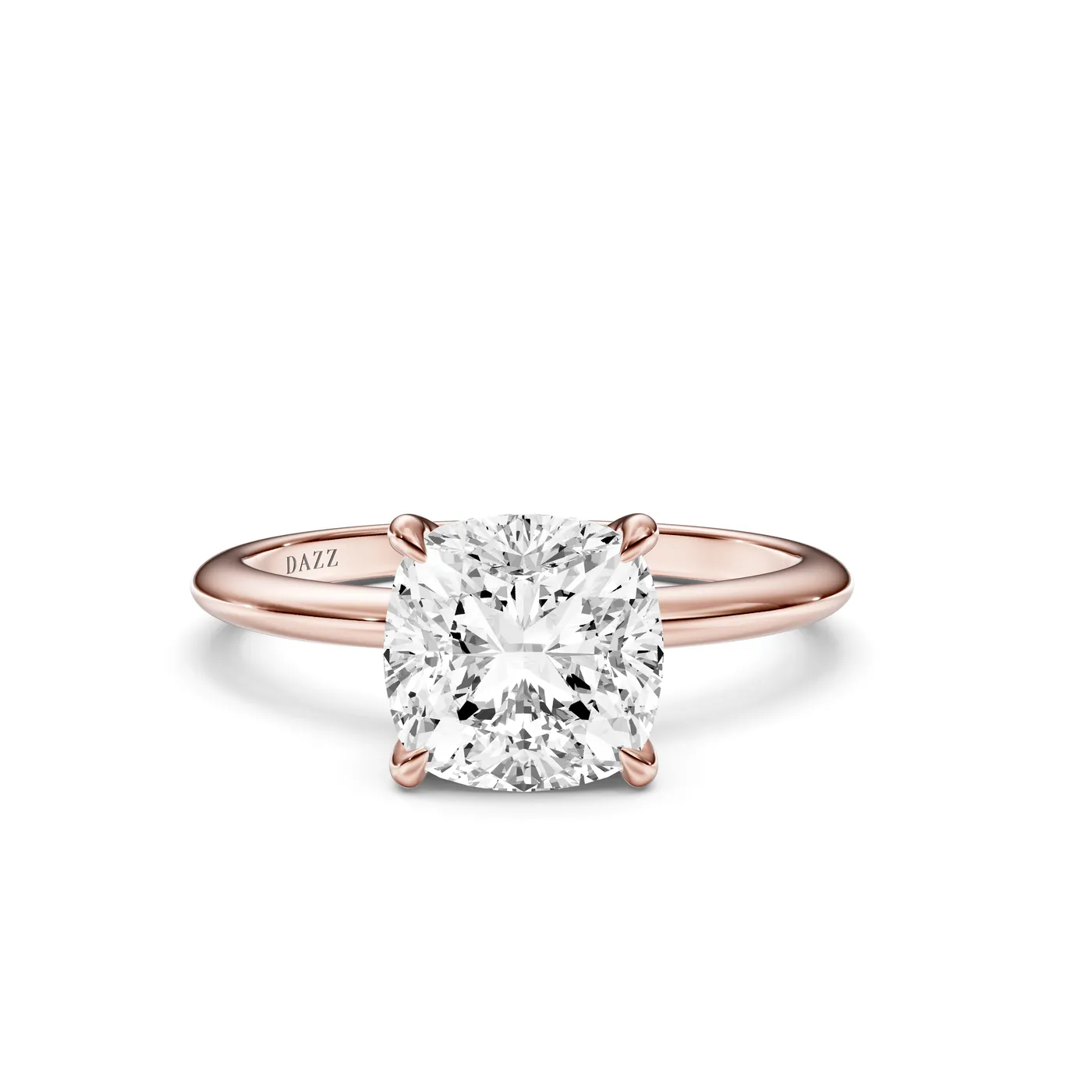
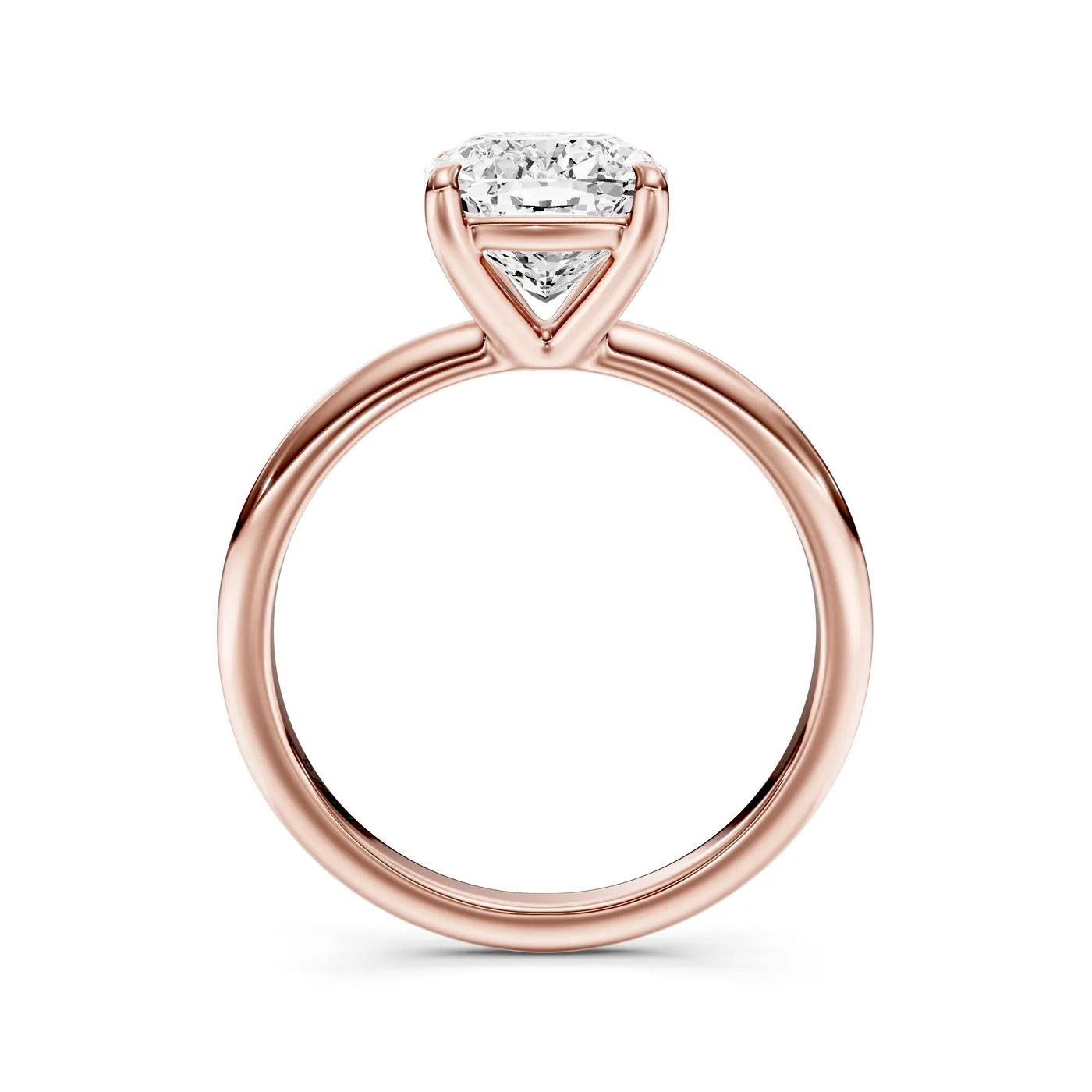
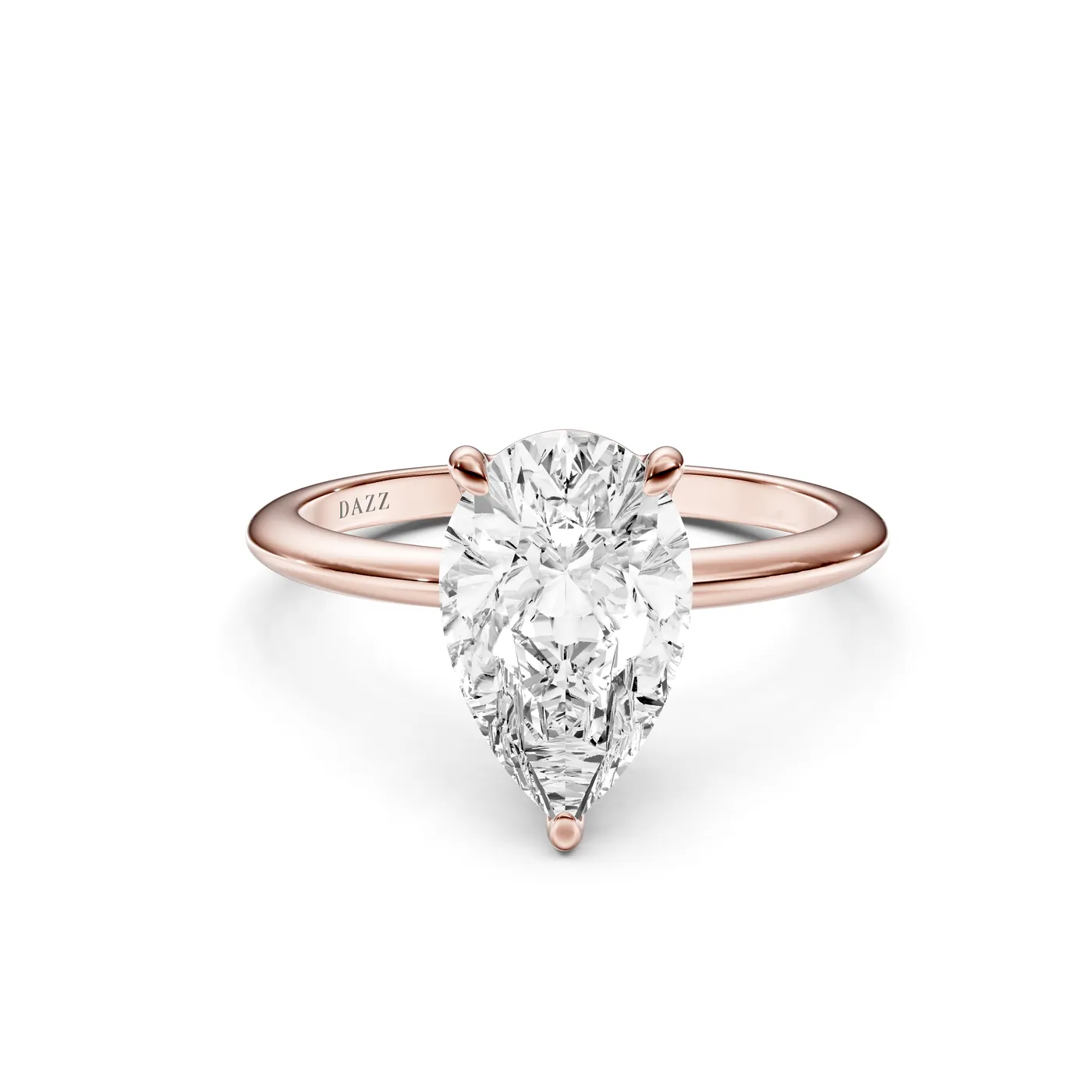
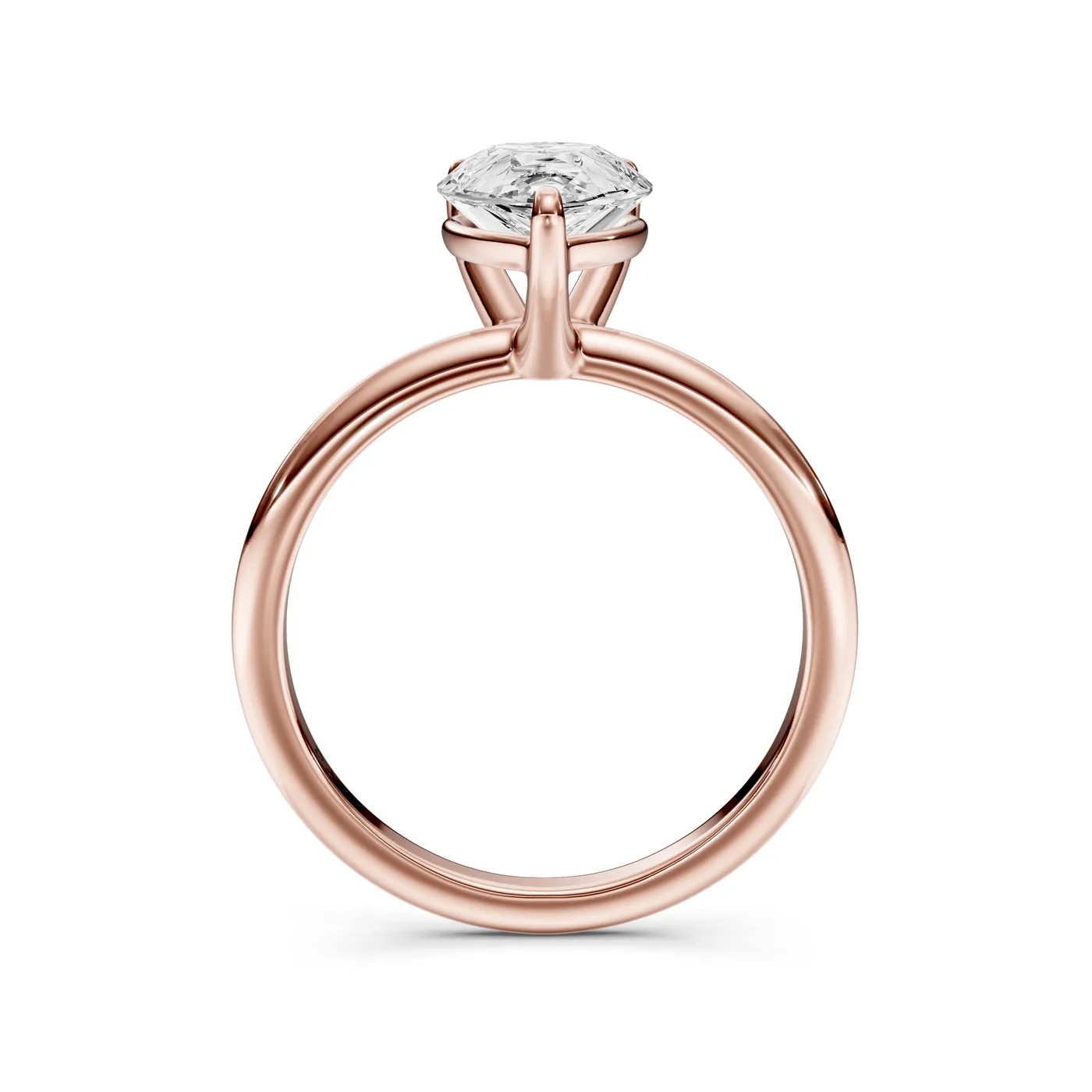
Solitaires to begin with
The same solitaire, in four shapes. Choose a diamond type, carat weight and gold color — and the price updates as you go.
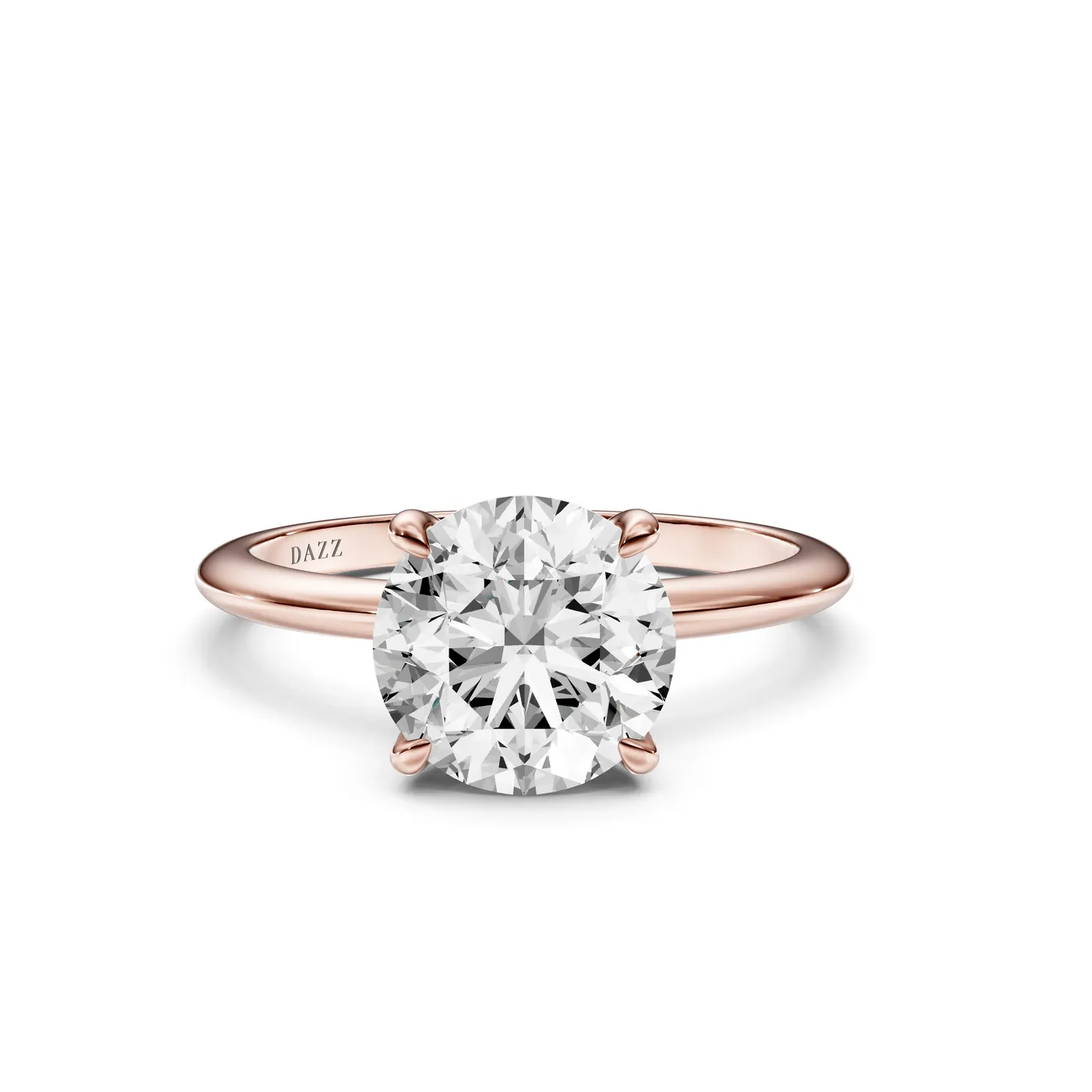
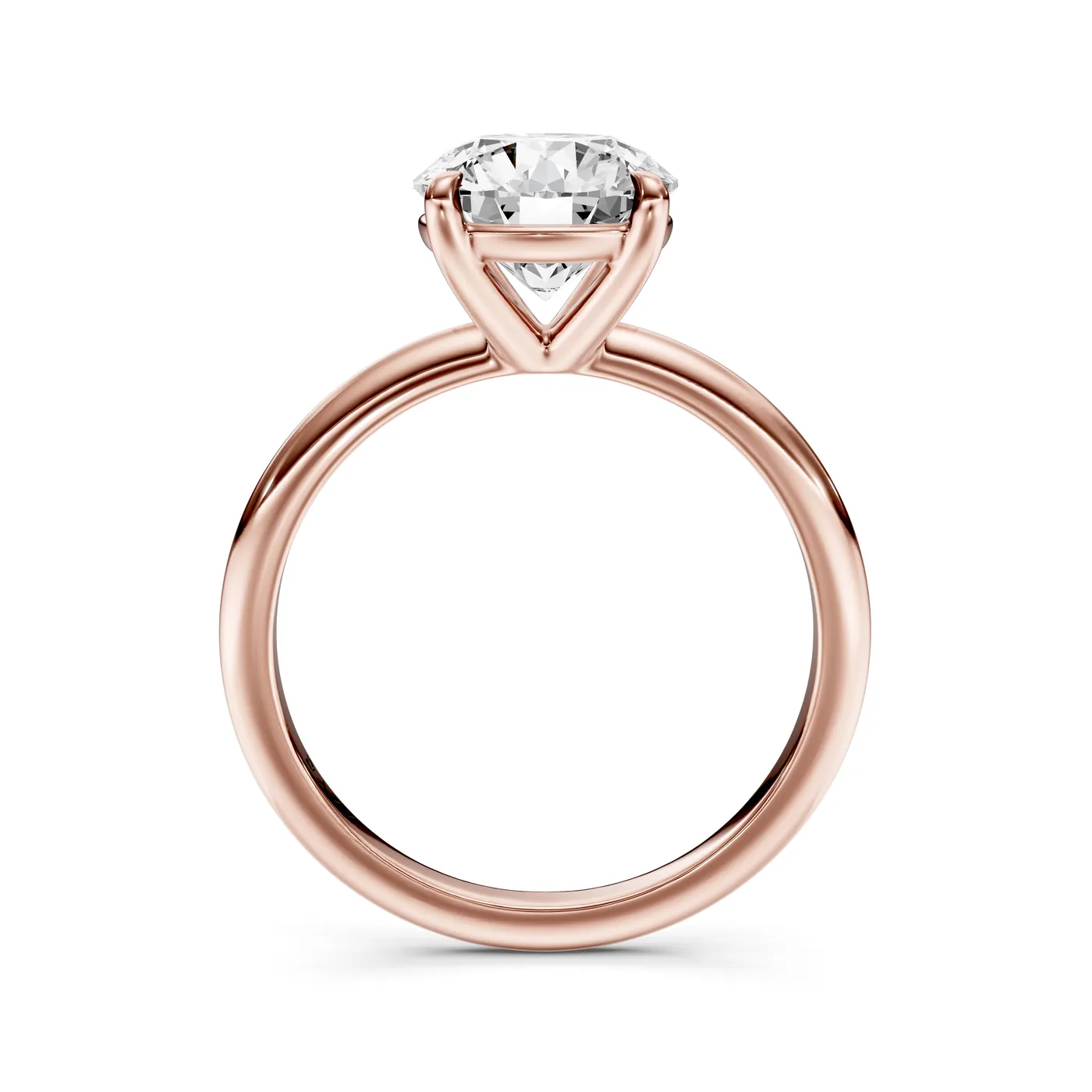
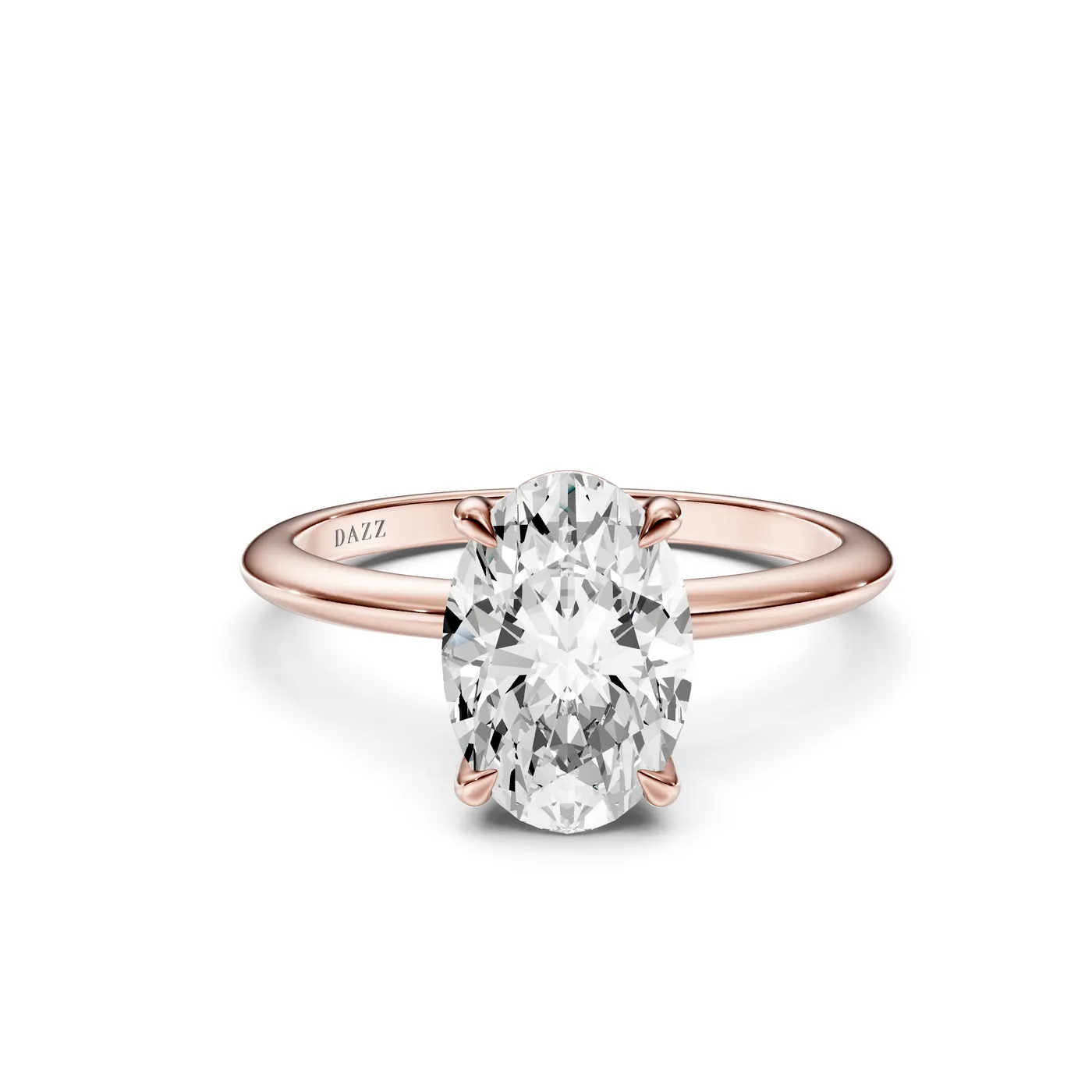
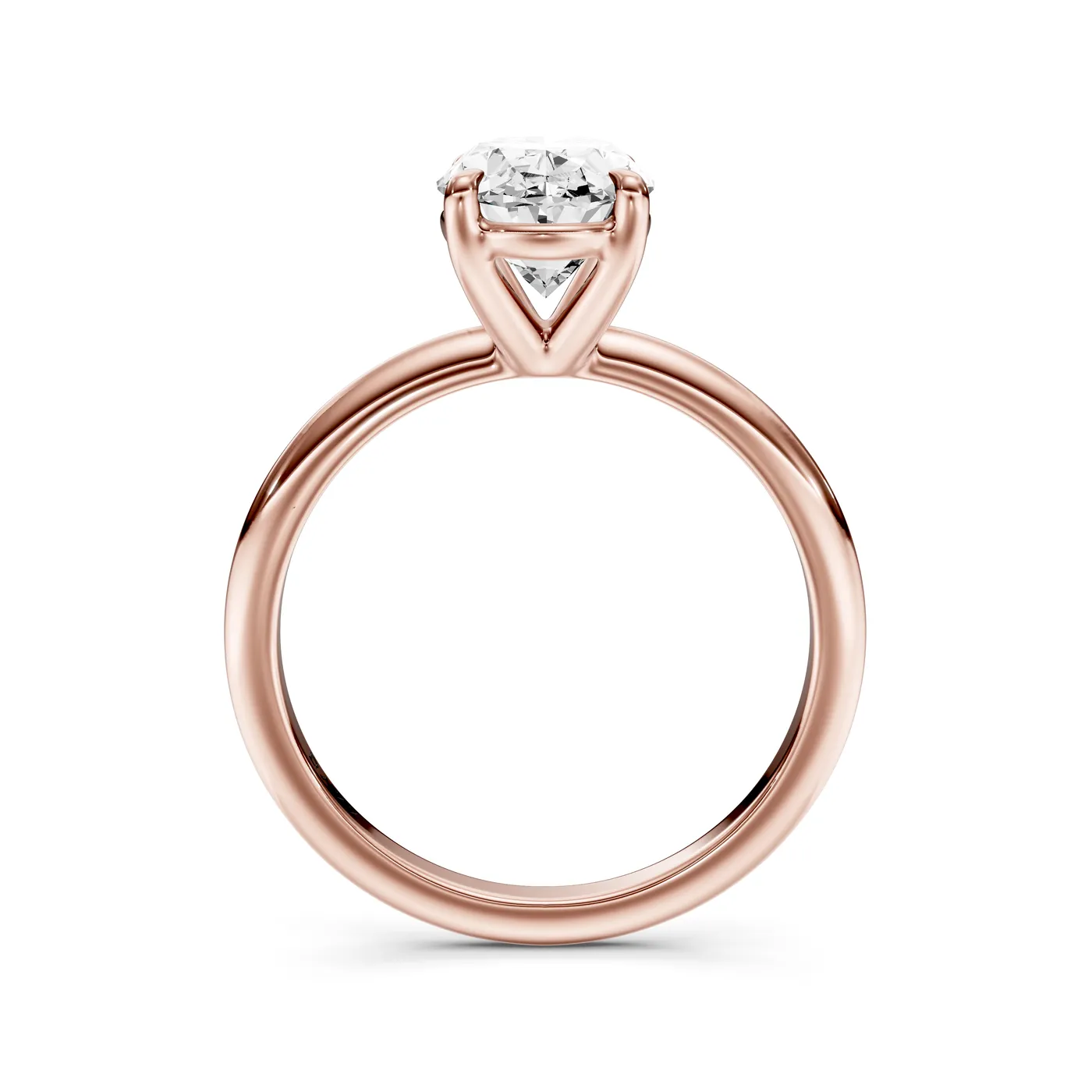
Chapter 05
How to find her ring size without spoiling the surprise
If you are planning a surprise proposal, finding her size is the one small challenge. A few tricks that work:
Borrow a ring she already wears
Quietly borrow a ring she already wears on that finger (usually the left ring finger). Have any local jeweler measure it, or measure the inner diameter yourself and send us the number — we will work out the size from there. The most accurate way.
Trace the inner circle
If you have the ring for a few minutes, lay it on paper and trace the inside of the band, or measure the inner diameter with a ruler. Send us the tracing or the number — it gives us a good starting point.
Ask someone close to her
A close friend, her mother or a sister usually knows the size — or would be glad to "go shopping" and find out quietly.
The safety net: we resize
And most importantly, do not let the size hold you back. If the guess is not quite right, we will resize the ring after the proposal — the first resizing is free at any time; only the shipping to and from our workshop is at your expense. Better to guess and surprise her than to give up the surprise.
Chapter 06
Why buy from a maker at the Diamond Exchange
Most jewelry stores buy a finished product and sell it on — and every link in that chain adds to the price. We are a casting workshop at the Israel Diamond Exchange in Ramat Gan, and we make every ring ourselves. That changes a few fundamental things:
Price from the source
No middlemen, no store in between. You pay for the diamond and the work — not for a distribution chain.
A certificate for every diamond
Every center diamond comes with an IGI (lab-grown) or GIA (natural) certificate — the international standard. You know exactly what you bought.
A lifetime manufacturer's warranty
A ring that leaves our hands remains our responsibility — setting, structure, service and cleaning. Always.
See the stones with your own eyes
Book a video appointment with the stones in front of the camera — or, if you are in Israel, sit with us at the Exchange and choose your diamond among the stones themselves.
Three generations, since 1986, in the very complex where Israel's diamond trade takes place. It is not just where we come from — it is how we are able to give you a better diamond at a fairer price.
Questions and answers
What we are asked most
Fine work is not rushed. Every ring is made by hand in our own workshop — most in about 10 business days — and we confirm the exact timing with you personally. If you have an important date, tell us in advance and we will make sure the ring is ready in time.
We would love to meet you
The door is open
Message us on WhatsApp, book a video appointment, or, when you are in Israel, visit us at the Israel Diamond Exchange in Ramat Gan.